
From Viral Attention to a Formal Process
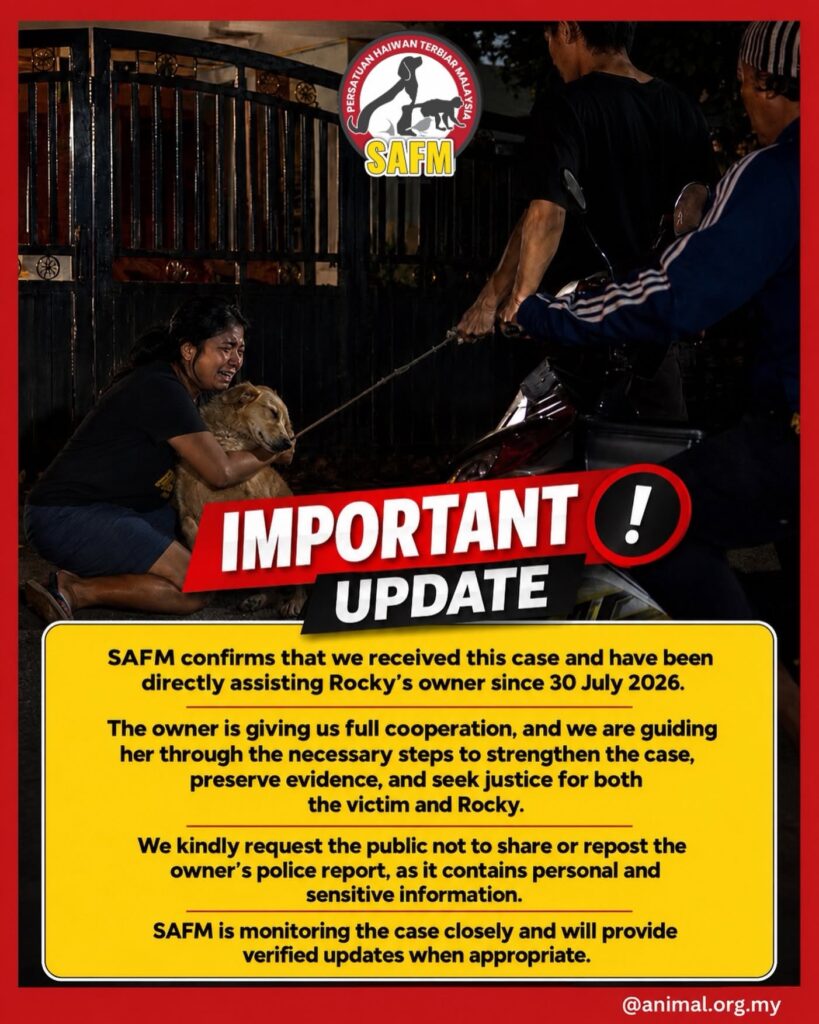
When SAFM received the Rocky case on 30 July 2026, its immediate priority was not to decide the case on social media. The priority was to preserve potentially important evidence, assist the complainant in using the proper channels and ensure that the animal-welfare and other allegations could be examined by the competent authorities.
Reviewing the Available Material
SAFM communicated directly with Rocky’s owner and reviewed material available in connection with the incident, including video footage and information provided to the organisation.
SAFM also received information concerning persons who may have witnessed events that were not captured in the publicly circulated video. Because the recording did not show the entire chronology, information concerning what allegedly occurred before the owner’s arrival was potentially important.
The identities and personal details of private witnesses are not published in this public case record.
Preserving Rocky’s Remains
Rocky’s remains had initially been buried after his death. Recognising that the remains could be relevant to a veterinary examination, SAFM guided the owner on steps to preserve them so that they could be made available to the Department of Veterinary Services (DVS).
The purpose was to preserve the possibility of an official veterinary assessment rather than allowing conclusions about Rocky’s injuries or cause of death to be based solely on social-media footage or public speculation.
Department of Veterinary Services (DVS)
The animal-welfare aspects of the case were brought through the appropriate DVS process.
SAFM sought examination of the circumstances surrounding Rocky’s treatment and death under the applicable Malaysian animal-welfare framework. SAFM does not use this public record to determine whether any particular statutory offence was committed. That assessment belongs to the competent authorities based on the evidence.
Police Process
SAFM also assisted Rocky’s owner in navigating the police process, particularly in relation to her allegations concerning physical acts against her during the incident and any other matters falling within police jurisdiction.
SAFM emphasised the importance of giving investigators a complete account and preserving relevant supporting material. Where clarification or additional information was required, the owner was guided on the appropriate process for bringing that information to the attention of the authorities.
Evidence Preservation
Throughout SAFM’s involvement, the organisation emphasised preservation of original material wherever possible. This included relevant videos, photographs, documents, witness information and other material potentially capable of assisting an investigation.
Where different parties provide materially different accounts of an incident, preservation of original evidence and its metadata can be particularly important.
Supporting Rocky’s Owner
SAFM remained in communication with Rocky’s owner while she navigated veterinary, police and other processes arising from the case.
SAFM’s role was not to replace investigators or the legal profession. Its role was to assist the complainant in understanding the relevant channels, help preserve the integrity of the case and facilitate access to appropriate support and legal guidance.
Areas Requiring Institutional Examination
SAFM considered the case to raise distinct but interconnected areas for examination:
- Animal welfare – the manner in which Rocky was captured, restrained and handled, and the circumstances surrounding his death.
- Police matters – the owner’s allegations concerning physical acts against her and any other matters within police jurisdiction.
- Local-authority accountability – the operation, authorisation, participation, equipment, supervision, records and compliance with applicable procedures.
Questions SAFM Sought to Have Answered
SAFM’s advocacy focused on questions capable of being answered through evidence, including:
- Who authorised and supervised the operation?
- Who was authorised to participate and what role did each person perform?
- What capture or restraint equipment was authorised, and what was actually used on Rocky?
- Who applied and controlled the restraint?
- What occurred before Rocky’s owner arrived?
- What evidence exists concerning the allegation that Rocky was struck?
- What evidence exists concerning the allegation that Rocky was pulled or dragged?
- What was the duration and manner of the restraint?
- What action was taken when Rocky showed signs of distress?
- What operational documentation and records exist?
- Were the applicable procedures followed?
- What do the veterinary findings establish regarding Rocky’s injuries and death?
The purpose of raising these questions is to support a complete investigation. The questions themselves are not findings that wrongdoing occurred.
Why SAFM’s Intervention Mattered
The Rocky case illustrates the difference between public attention and institutional accountability.
A viral video may bring an incident to public attention. Accountability, however, requires evidence to be preserved, relevant witnesses and records to be examined, competent authorities to perform their respective functions and affected persons to have access to the appropriate processes.
SAFM therefore sought to move the case from viral attention to evidence, investigation and accountability.
Why a Press Conference Became Necessary
As public discussion intensified, competing narratives, allegations and rumours circulated around the case. SAFM believed Rocky’s owner should have an opportunity to provide her account directly and that the key investigative questions should be placed clearly on the public record.
SAFM therefore organised the Justice for Rocky Press Conference on 5 August 2026.
Continue to Part 3: Justice for Rocky Press Conference and the Continuing Search for Answers.
Important Note on Allegations and Ongoing Processes
This case record is based on information available to SAFM, material reviewed by SAFM, accounts provided in connection with the case, and publicly available information. Where material facts remain disputed, they are identified as allegations or attributed to their respective sources. SAFM does not determine criminal or civil liability through this publication. Questions of liability, offences and legal responsibility are matters for the competent authorities and courts to determine on the evidence.
